Bringing home an eight-week-old puppy means signing up for roughly 1,400 bathroom trips in the first year. Puppy potty training decides whether those trips happen on schedule in the yard or at 2 a.m. on the rug, and the habits you build in the first eight weeks echo for the dog’s whole life. The overlooked half of the job is cleanup, because how you handle waste and accidents directly shapes how fast the training sticks.
Here is the complete 2026 system: the realistic timeline, twelve habits that do the heavy lifting, and the cleanup rules most first-time owners learn too late.
How Long Does Puppy Potty Training Take?
Four to six months to reliability is the honest average, with small breeds often needing longer because tiny bladders mean tiny margins. Some puppies click in eight weeks; a few need a year. The variable you control is consistency, not the calendar.
Physiology sets the floor. A puppy can typically hold its bladder about one hour per month of age, which is why the schedule below matters more than any correction ever will. Trainers publishing through the American Kennel Club emphasize the same core loop: predict, take out, reward, repeat.
| Puppy age | Max hold time | Daytime trips needed |
|---|---|---|
| 8 to 10 weeks | About 1 hour | 10 to 12 |
| 3 months | 2 to 3 hours | 8 to 10 |
| 4 to 5 months | 3 to 4 hours | 6 to 8 |
| 6+ months | 4 to 6 hours | 4 to 6 |
The 12 Habits That Make Puppy Potty Training Stick
- Feed on a fixed schedule. Predictable input creates predictable output, usually 15 to 30 minutes after meals.
- Out after every transition: waking, eating, playing, chewing, and greeting visitors.
- Use one door and one spot. Scent memory turns a corner of the yard into a cue all by itself.
- Add a cue word the moment the puppy starts going, then reward within two seconds of finishing.
- Pay in treats outside, not at the door. Rewarding at the door teaches door-touching, not elimination.
- Crate for the gaps you cannot supervise, sized so the puppy can stand and turn but not designate a bathroom corner.
- Tether or gate during free time so wandering off to a quiet hallway is impossible.
- Log every trip for two weeks. A notes app reveals your puppy’s true rhythm faster than any guide.
- Never punish accidents. Scolding teaches hiding, and hidden accidents are how training stalls for months.
- Interrupt, do not react. Catch one mid-accident, clap once, carry the puppy out, reward completion.
- Clean accidents with enzymes only. Ammonia-based cleaners smell like urine to a dog and re-mark the spot.
- Tighten freedom gradually. Each dry week earns a little more unsupervised space, one room at a time.
Why Cleanup Is Half the Training
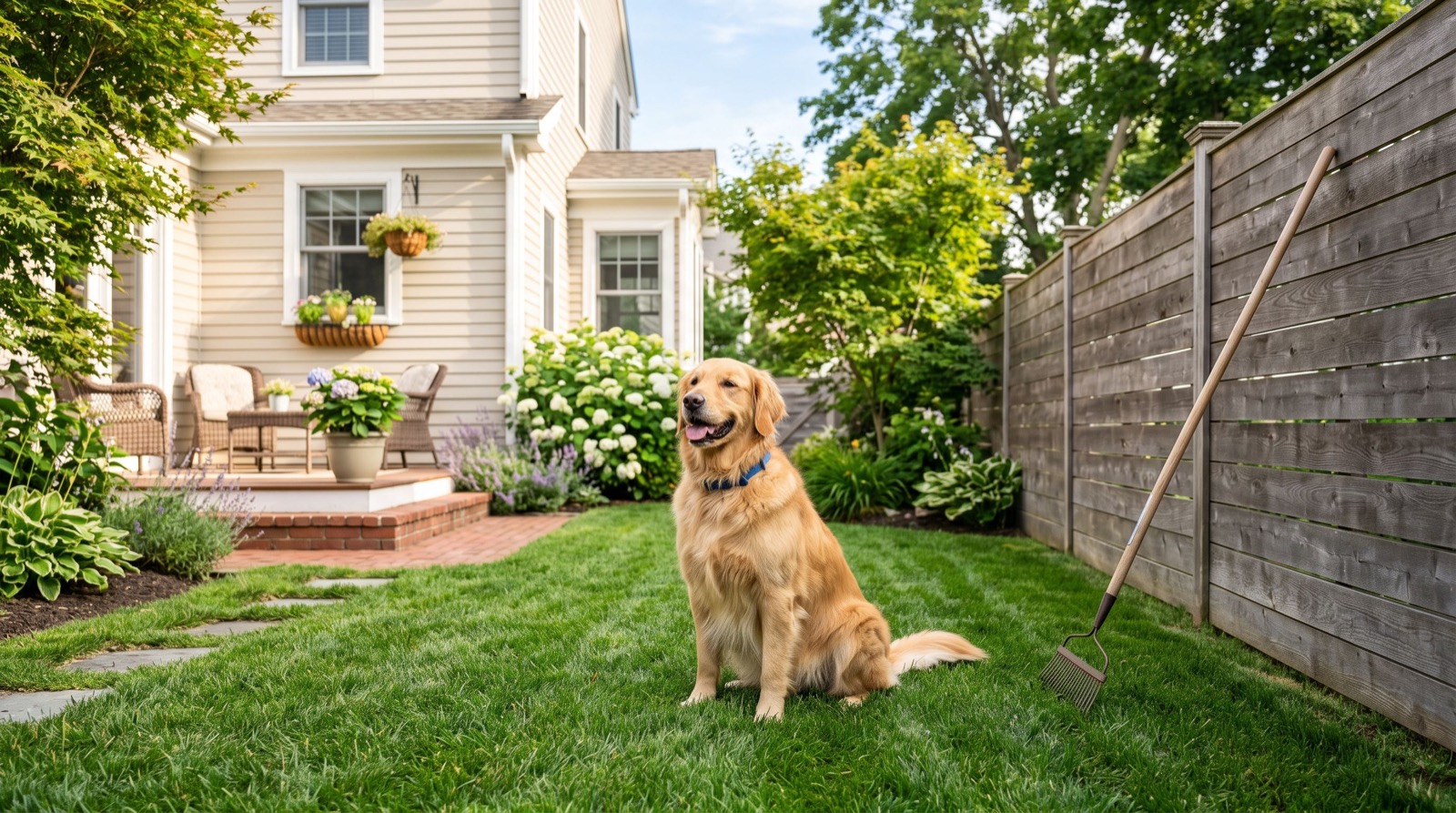
Dogs choose bathroom spots by nose. A yard scattered with old waste tells a puppy the whole lawn is a toilet, which sabotages the one-spot habit you are trying to build. Keeping the designated area picked up daily, and the rest of the yard spotless, sharpens the scent contrast that guides the puppy back to the right patch.
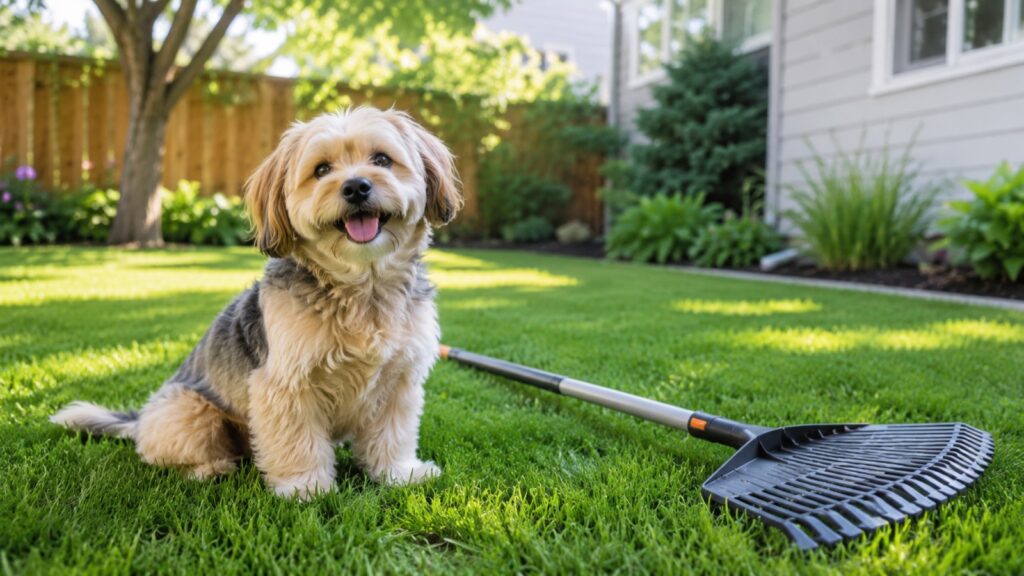
Daily pickup at puppy frequency is a volume job, so make it effortless. A Heavy Duty Pooper Scooper parked by the back door turns each cleanup into a ten-second, no-touch task, which matters when you are doing it several times a day through housetraining season. There is a health reason for speed too: puppies are the age group most likely to carry roundworms, and same-day removal keeps eggs out of the soil your puppy plays in.
Taking the Show on the Road
Walks and outings start as soon as your vet clears vaccinations, and public cleanup becomes part of the habit set. Clip a Dog poop bag roll to every leash you own on day one, because the habit you want is automatic, not remembered. Practice the pickup motion at home a few times so fumbling in front of an audience never becomes a reason to skip it.
If work hours make midday trips impossible, a puppy visit service bridges the gap during the critical months. Screen candidates the way you would screen quality service providers in any field: insured, referenced, and willing to follow your exact schedule, cue word, and reward routine rather than improvising their own.
Apartment and Small-Space Adjustments
High-rise puppy raising compresses the whole system into an elevator ride, and the timeline stretches accordingly. Plan for it rather than fighting it.
Pick one fixed relief spot outside the building and go there every single time, even when a closer patch of grass tempts you. The consistency that a backyard provides automatically has to be manufactured downtown. Carry the young puppy through the lobby during the early weeks, since a puppy that walks to the elevator often cannot hold long enough to reach the street.
A balcony turf tray can serve as a legitimate bridge for the 2 a.m. months, treated as a temporary station and retired deliberately once the bladder catches up. Keep it rinsed daily; a smelly tray teaches avoidance, not habit.
Frequently Asked Questions
Should I use puppy pads or go straight outside?
Go straight outside if your schedule allows it. Pads teach that indoors is sometimes acceptable, which adds an unlearning step later. Pads earn their place mainly in high-rise apartments and for very early morning gaps.
My 6-month-old was trained and is suddenly having accidents. Why?
Regression is common in adolescence, but rule out medical causes first, since urinary tract infections are frequent in young dogs. If the vet clears them, return to the 8-week-old supervision level for two weeks. Most regressions resolve fast when freedom shrinks.
How do I potty train while working full-time?
Combine a crate schedule, a midday helper, and a gated safe zone with a pad only for true emergencies. Expect the timeline to stretch a few extra weeks, and protect the morning and evening routines fiercely, since those anchor the whole system.
Small Habits, Clean House
Puppy potty training is twelve small habits repeated until they become the dog’s habits too: schedule the food, guard the transitions, reward outside, and keep every surface, indoors and out, scent-clean. Start the two-week trip log tonight; by the time it is full, you will know your puppy’s clock better than the puppy does.